All Categories
Featured


Maximizing Your Score by Reducing Your Card Balances
Table of Contents
The Advancement of Risk Assessment in local communities
By middle of 2026, the shift from conventional direct credit history to complex expert system designs has reached a tipping point. Monetary institutions throughout the United States now depend on deep knowing algorithms to predict borrower habits with a precision that was difficult just a couple of years ago. These systems do not merely look at whether a payment was missed; they evaluate the context of monetary decisions to identify creditworthiness. For locals in any major metropolitan area, this suggests that the basic three-digit score is increasingly supplemented by an "AI self-confidence interval" that updates in real time based upon daily deal data.
The 2026 variation of credit scoring places a heavy emphasis on money flow underwriting. Rather of relying exclusively on the age of accounts or credit usage ratios, loan providers utilize AI to scan bank statements for patterns of stability. This shift benefits individuals who may have thin credit files but preserve consistent residual income. Nevertheless, it also demands a higher level of financial discipline. Machine knowing models are now trained to recognize "stress signals," such as an abrupt boost in small-dollar transfers or changes in grocery spending patterns, which may show impending monetary challenge before a single bill is in fact missed.
Real-Time Credit Tracking and Predictive Analysis

Credit monitoring in 2026 has moved beyond simple notifies about new queries or balance modifications. Modern services now supply predictive simulations driven by generative AI. These tools enable consumers in their respective regions to ask specific questions about their monetary future. A user might ask how a particular automobile loan would affect their capability to certify for a home mortgage eighteen months from now. The AI analyzes present market trends and the user's personal information to offer a statistical likelihood of success. This level of foresight helps avoid customers from taking on debt that might threaten their long-term objectives.
These keeping an eye on platforms also function as an early warning system against advanced AI-generated identity theft. In 2026, synthetic identity scams has actually become more typical, where criminals blend real and fake data to develop completely brand-new credit profiles. Advanced monitoring services utilize behavioral biometrics to spot if an application was most likely completed by a human or a bot. For those focused on Debt Management, staying ahead of these technological shifts is a requirement for maintaining monetary security.
Consumer Rights and the Right to a Description
As AI takes over the decision-making procedure, the question of consumer rights becomes more complex. The Customer Financial Protection Bureau (CFPB) has provided strict guidelines in 2026 regarding algorithmic openness. Under these rules, lending institutions can not simply claim that an AI design denied a loan; they need to supply a particular, easy to understand factor for the adverse action. This "explainability" requirement makes sure that residents of the local market are not left in the dark when an algorithm considers them a high threat. If a device discovering model determines a particular pattern-- such as inconsistent energy payments-- as the reason for a lower score, the lending institution should disclose that detail plainly.
Consumer advocacy remains a foundation of the 2026 financial world. Given that these algorithms are built on historic information, there is a constant risk of baked-in predisposition. If an AI model unintentionally penalizes specific geographic areas or market groups, it breaks federal fair lending laws. Many people now work with DOJ-approved nonprofit credit therapy firms to examine their own reports and comprehend how these machine-driven choices impact their loaning power. These agencies provide a human look at a system that is ending up being increasingly automated.
Integrating Option Data into the 2026 Rating
The inclusion of alternative data is perhaps the greatest modification in the 2026 credit environment. Rent payments, subscription services, and even expert licensing information are now standard components of a credit profile in the surrounding area. This modification has opened doors for millions of people who were formerly "unscoreable." AI handles the heavy lifting of confirming this data through safe open-banking APIs, making sure that a history of on-time rent payments carries as much weight as a conventional mortgage payment might have in previous years.
While this growth of data supplies more opportunities, it likewise means that more of a customer's life is under the microscopic lense. In 2026, a single overdue fitness center subscription or a forgotten streaming membership might possibly dent a credit rating if the information is reported to an alternative credit bureau. This makes the role of comprehensive credit education much more essential. Understanding the kinds of information being gathered is the very first step in managing a contemporary financial identity. Effective Debt Relief Programs helps people navigate these intricacies by offering structured strategies to resolve debt while simultaneously improving the data points that AI models value most.
Debt Management in an Algorithmic World
For those fighting with high-interest financial obligation in 2026, the interaction in between AI scoring and debt management programs (DMPs) has actually shifted. Historically, going into a DMP might have triggered a short-term dip in a credit report. Today, AI models are better at acknowledging the difference between a consumer who is defaulting and one who is proactively seeking a structured payment plan. Many 2026 algorithms view participation in a nonprofit debt management program as a positive indicator of future stability rather than a sign of failure.
Not-for-profit agencies that supply these programs work out straight with creditors to lower rates of interest and combine payments into a single month-to-month obligation. This procedure is now frequently handled through automated websites that sync with the customer's AI-driven credit display. As payments are made, the favorable information is fed back into the scoring designs, often leading to a much faster score healing than was possible under older, manual systems. Individuals who actively look for Debt Relief in California typically find that a structured approach is the most efficient method to satisfy both the financial institutions and the algorithms that identify their monetary future.
Preserving Financial Privacy and Security
With a lot data flowing into AI designs, privacy is a leading concern in 2026. Consumers in your community have the right to pull out of certain kinds of data sharing, although doing so can sometimes result in a less precise (and for that reason lower) credit report. Balancing the desire for a high score with the requirement for data privacy is a personal choice that requires a clear understanding of how credit bureaus use details. Modern credit reports now include a "information map" that shows precisely which third-party sources added to the current rating.
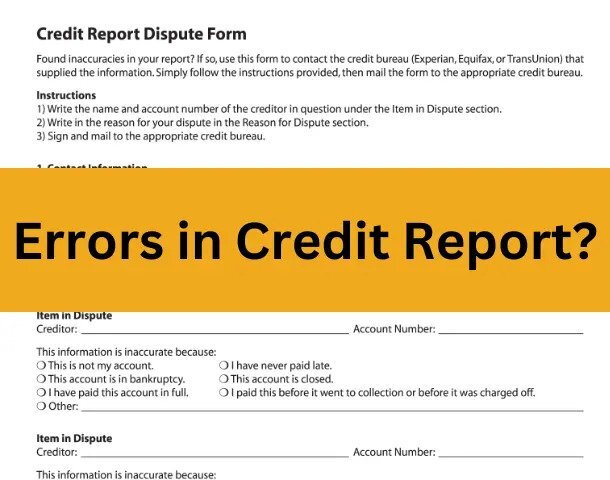
Security measures have actually likewise advanced. Two-factor authentication is no longer enough; numerous banks now use AI to validate identity through voice patterns or typing rhythms. While this adds a layer of protection, it likewise means consumers must be more alert than ever. Regularly inspecting credit reports for mistakes is still an essential responsibility. If an AI model is fed inaccurate data, it will produce an incorrect score, and fixing those errors in an automatic system can often require the assistance of a professional therapist who comprehends the conflict procedure in 2026.
The shift toward AI in credit scoring is not just a technical modification; it represents a brand-new method of thinking of trust and danger. By concentrating on behavioral consistency instead of simply historic financial obligation, the 2026 monetary system provides a more nuanced view of the individual. For those who remain notified and use the tools offered to them, this brand-new period supplies more paths to monetary stability than ever previously.

Table of Contents
Latest Posts
Is Home Equity the very best Method to Consolidate?
:fill(white):max_bytes(150000):strip_icc()/Discover_PersonalLoans_Primary_Logo_RGB-22e400594a1e4c1fbb0f412ec03c6444.jpg)
Comparing Debt Management Programs to Standard Loans in 2026

Expert Financial Obligation Analysis for Shreveport Debt Management Program
More
Latest Posts
Is Home Equity the very best Method to Consolidate?
Comparing Debt Management Programs to Standard Loans in 2026
Expert Financial Obligation Analysis for Shreveport Debt Management Program